Community perspectives on surviving sexual violence
In 2024, Life after Trauma conducted a community survey on the impact of sexual violence. I wanted to understand how people rebuild their lives in the aftermath of sexual trauma, and how our society could better support them. The survey consisted of 26 optional questions, though most respondents completed the vast majority of them. On average, respondents spent about 12 minutes completing the survey.
The survey is still open and is accepting submissions on a rolling basis. If you’ve experienced sexual violence and would like to share a little of your experience, you can take part here.
The full data set is available here, but here are four overarching trends from the survey:
1) For the vast majority of us, sexual violence is something we overcome largely on our own.
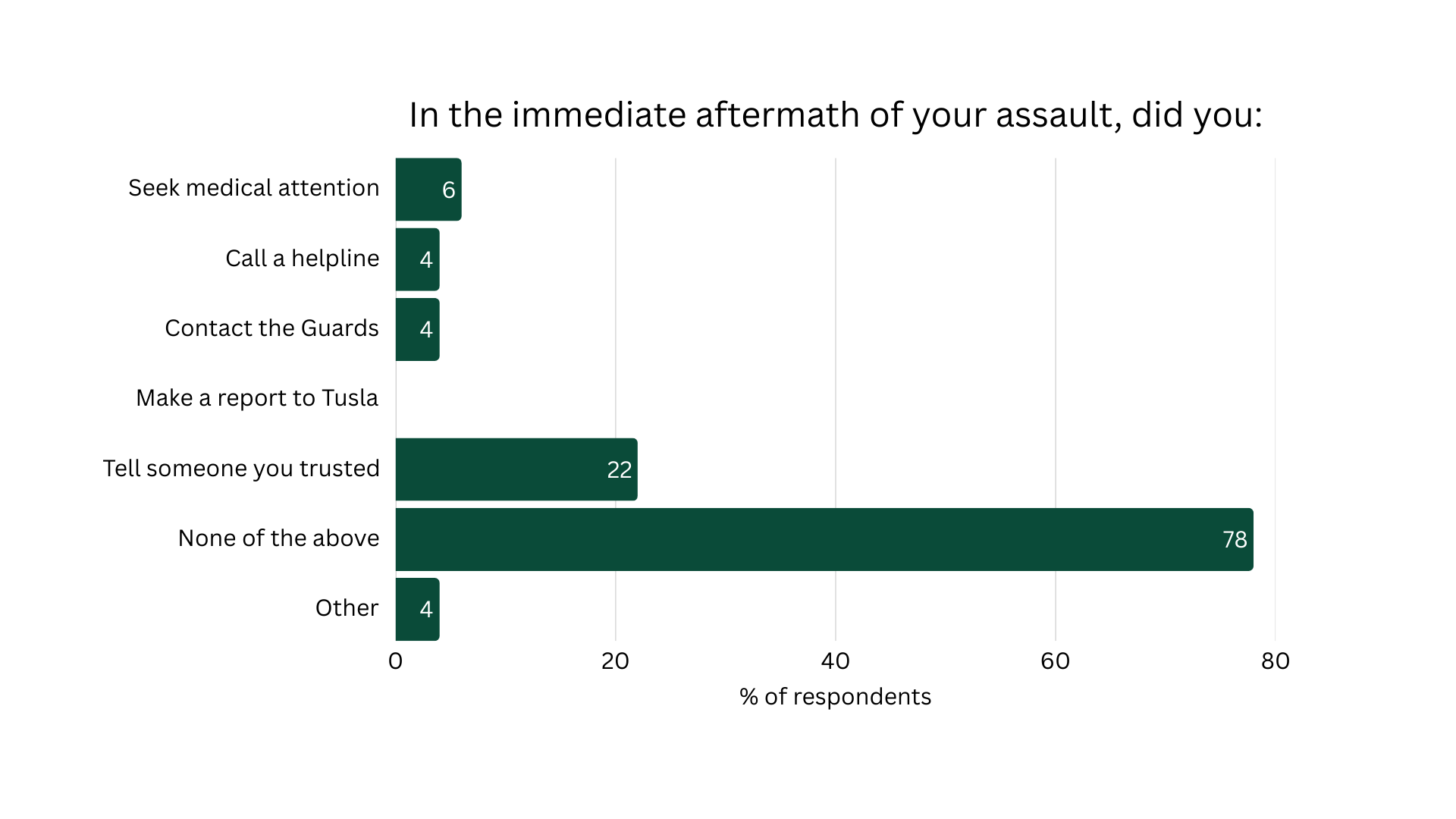
In the immediate aftermath of an assault, 78% of respondents didn’t contact any support services. As they worked to rebuild their lives, a further 72% said that they received no support from the criminal justice, health or child protection services, nor charities/NGOs. Similar to other research, this survey found that 98% of respondents did not go to court as a result of their experiences.
2) The impact of sexual violence is severe, long-lasting and multi-dimensional.
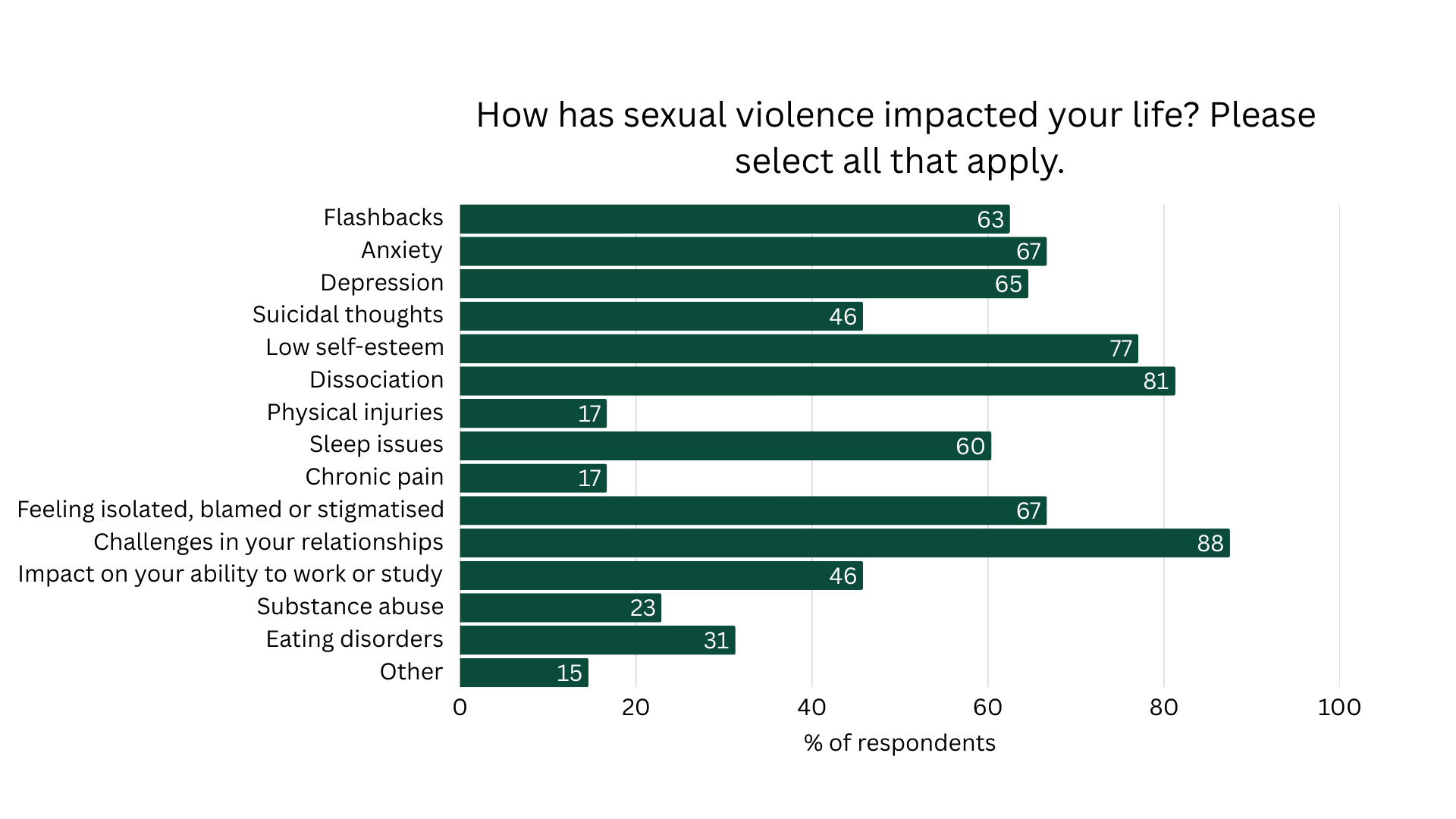
Respondents experienced experienced a wide range of negative outcomes, including flashbacks, anxiety, depression, suicidal thoughts, low self-esteem, dissociation, sleep issues, relationship challenges, chronic pain, impacts on their ability to work or study, substance abuse issues, eating disorders and feelings of isolation and blame.
3) More than three-quarters of respondents have also experienced some form of post-traumatic growth.
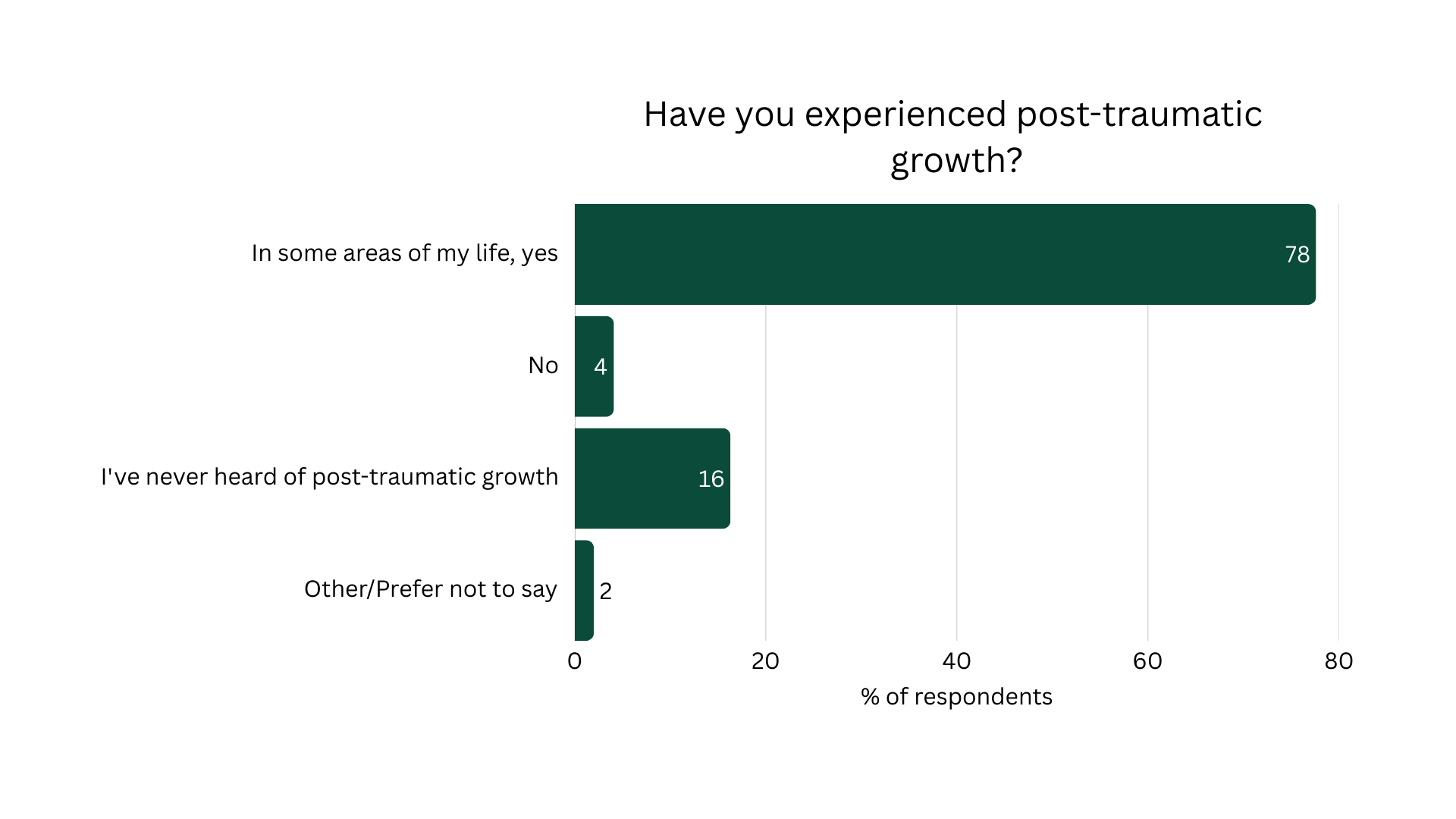
Just 4% of respondents hadn’t experienced post-traumatic growth in at least some areas of their lives, while 16% has never heard of the concept. Respondents cited a wide range of practices as being instrumental in helping them to rebuild their lives, including therapy, physical practices (yoga, exercise) meditation, creative practices (journalling, art therapy), support from loved ones and other survivors, volunteering and campaigning for change.
4) Many respondents don’t connect with “survivor” language.
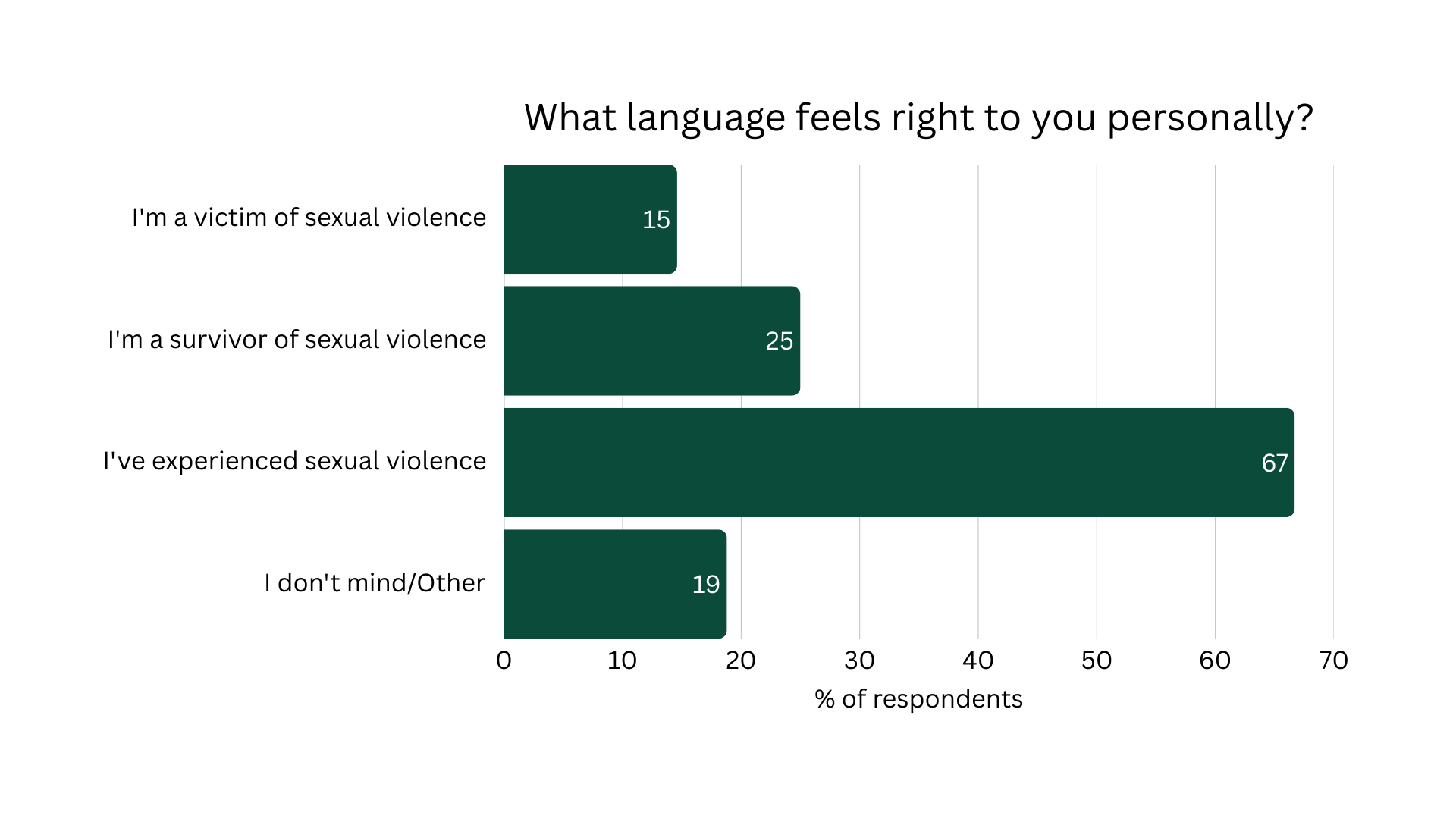
When I speak or write about my experiences with sexual trauma, I refer to myself as a survivor. But this language doesn’t feel right to everyone. Two-thirds of respondents think of themselves as “people who’ve experienced sexual violence”, rather than either victims or survivors.